

February 26, 2026
Dale Steele held many titles throughout his life: provider, artist, rancher, and WWII veteran, among others.
When the 100-year-old Pierce, Nebraska, resident died in February, he earned a new designation—oldest organ donor in the United States.
Dale was born on what’s now known as Veterans Day in 1925 and raised on a ranch near Ainsworth, Nebraska. He was drafted, and after graduating high school, served at the end of World War II in France, Germany, Belgium, and Czechoslovakia.
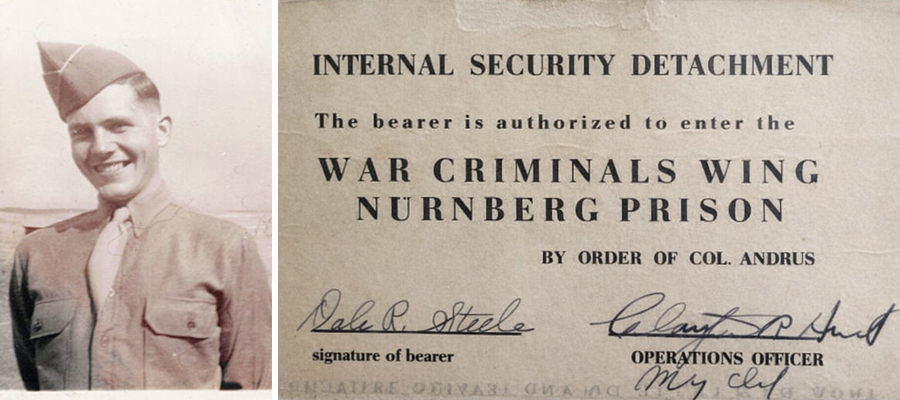
During his initial mission, Dale sought out remnants of the German army and assisted concentration camp survivors in returning home. He was then promoted to staff sergeant and deployed to Nuremberg. During the trials, he worked in the prison, guarding defendants, before being assigned to the interrogation wing. His time at Nuremberg involved keeping watch over top Nazi officials, including Herman Goering.
Following his service, Dale returned to Bassett, Nebraska, where he met his wife, Doris, at a local dance. The couple enjoyed a 72-year marriage, raising four children and welcoming as many grandchildren, to whom Dale was affectionately known as “Duffy.”
Dale’s work life was rooted in agriculture. He raised Hereford cattle on his ranch and worked at the Farmers Co-Op in Bassett. Later, he managed the Pierce Co-Op. Before retirement, he sold irrigation and grain handling equipment.
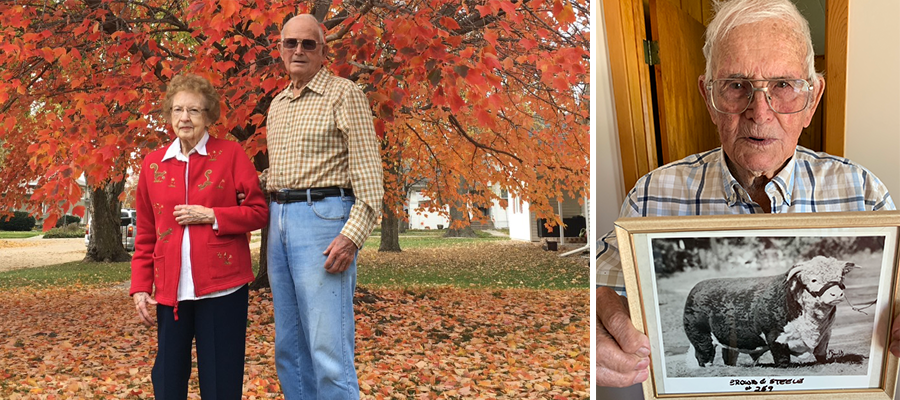
A love of gardening persisted throughout Dale’s life. Bountiful harvests helped feed his family during the Great Depression. Later, his children and grandchildren reaped the benefits of the fruits and vegetables Dale grew on his own properties until his passing. His grandchildren fondly remember hot batches of chili in the winter, courtesy of Grandpa Duffy’s canned tomatoes.
Dale was also an avid artist. The Steele home served as a gallery, featuring his paintings and wood carvings of waterfowl, lighthouses, and cattle. He also shared the craft with his grandchildren, teaching them to whittle during summer visits.
In their retirement years, Dale and Doris maintained an open-door policy for the children of their neighborhood and their grandkids. There you could find unlimited snacks, homework support, bicycle repair, music lessons, and space to practice your favorite sport.
It was these humble acts of service that defined Dale’s life and inspired his family to continue his legacy through organ donation.
“Dale was always very helpful and considerate of everyone around him, friends and strangers alike,” his grandson Scott Steele shared. “We believe he would do just about anything he could for someone in need.”
Now, Dale’s liver is providing new life to a grateful recipient.
Despite the distinction that came with his donation, Scott said Dale would have preferred to turn the spotlight on the recipient, rather than himself.
“Dale was humble and was not one to call attention to his acts of kindness. He would want the acknowledgement to go to the life he saved.”
“This is a story about a life of service that didn’t end at death,” said Kyle Herber, president and CEO of Live On Nebraska. “Mr. Steele lived a full century giving to others, and through donation, that generosity continues in a way that will impact lives for years to come.”
Although it is a common misconception that there is an age limit for organ donation, Dale’s story reinforces an important truth: age alone does not determine donor eligibility.
“Cases like this are extraordinary, but they remind us that donor eligibility is based on health and organ viability, not simply age,” said Dr. Lee Morrow, chief medical officer at Live On Nebraska. “Every donor is evaluated individually with rigorous medical criteria.”
Thousands of people across the United States are currently waiting for lifesaving transplants. One donor can save up to eight lives through organ donation and help many more through tissue donation.“This is a powerful reminder that generosity has no age limit,” Herber said. “Every donor leaves a legacy, and every person who registers has the potential to give the gift of life.”