

Organ & Tissue Donation in the LGBTQIA+ Community
At Live On Nebraska, we believe life is a gift meant to be shared. No matter who you love, you can register to be a donor.
Sexual orientation and gender identity do not impact an individual’s ability to receive an organ or tissue transplant.
However, national donation regulations impact the donation of organs and tissues differently. Read on to learn more about the different donation opportunities.
Organ Donation
Organ donation policy is regulated by the U.S. department of Health and Human Services (HHS). A person’s sexual orientation, gender, gender identity or expression does not prevent them from becoming an organ donor. One organ donor can someday save eight lives.
Tissue Donation
Tissue and eye donation policy is regulated by the U.S. Food and Drug Administration (FDA). The FDA has a male-to-male sex deferral policy which could prevent a man who has been sexually active with a man in the past five years from donating his tissues or eyes. Live On Nebraska, and other organ procurement organizations, are required to follow the FDA policy for eye and tissue donation.
Yazbek’s Gift
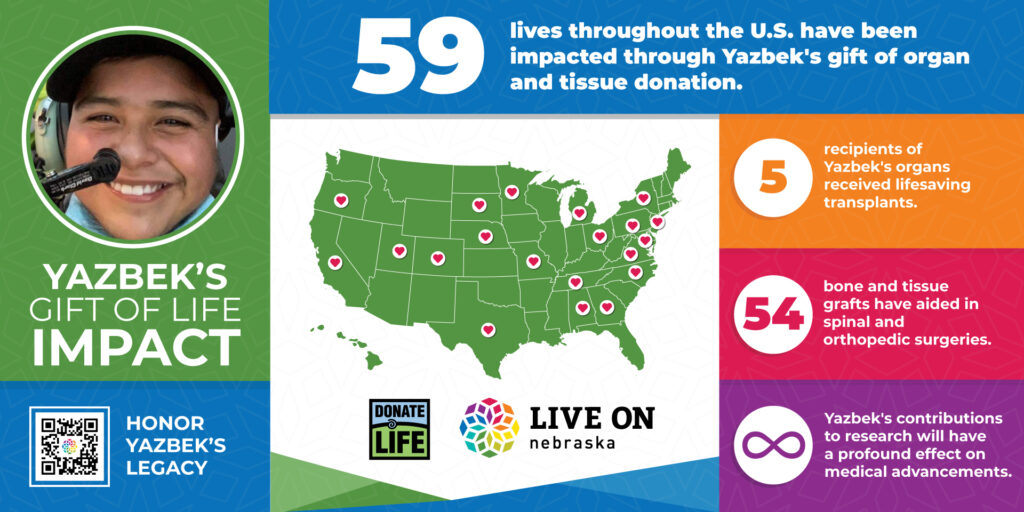
Yazbek “Bek” Gomez-Sosa of Omaha, was a kind and loving person who prioritized the happiness of others and could bring light to any situation. Bek was intelligent and hard-working. He held positions in various industries from healthcare to food services and was a volunteer for Habitat for Humanity. Bek loved the outdoors and was happiest on adventures by a shoreline, hiking, camping and fishing.
Bek impacted 59 lives when he became a donor hero in 2021. Recipients in 20 states have been saved or healed by Bek’s gift of life.
Bek’s mother Claudia said his family has found peace through Bek’s donation and his advocacy in the gay, transgender and Latino communities.
“Bek continues to make a difference, even in the afterlife, through organ donation. He continuously sacrificed himself for others and the impact he left on this world will be felt for an eternity.”
Donation Facts
- One donor can save eight lives through organ donation and potentially heal 100 or more people through tissue donation.
- The HOPE Act allows people living with HIV to be organ donors to people on the transplant list who are also living with HIV.
- Donation only becomes a possibility after everything is done to save your life. The doctors involved in lifesaving care do not decide if you become a donor.
- More than 100,000 people in the U.S. are waiting for a lifesaving organ transplant.
- There are no age restrictions for registering to donate (as long as you’re at least 16). In fact, the oldest organ donor in the U.S. was 100 years old.
- People with health conditions are still often able to be organ and tissue donors.
- There is no cost to the donor’s family for organ and tissue donation.
- All major religions support donation or the individual’s decision to be a donor.
- Traditional funeral services are possible following donation.